Sunday, 26th June 2005
I thought about coming here when I visited the nearby tomb at Dog Little (County Fermanagh), but the track looked like too much of a hike for the way I was feeling that day. If I'd known then what I know now I would have gone along. Since that visit I saw some pictures of it on The Modern Antiquarian website and seeing how good it was I made the trip.
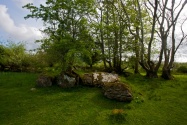
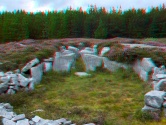
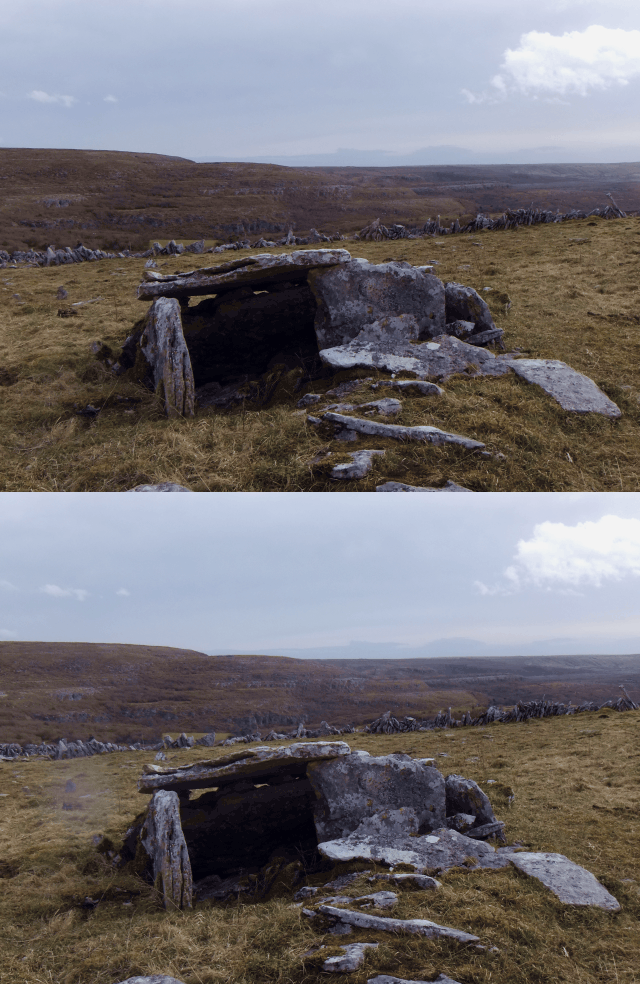
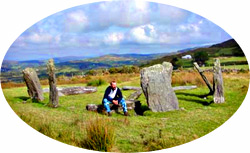
This splendid double court tomb is one of the few monuments that you could truly say has good disabled access. You can actually drive right up to it. I nearly drove into the west court!
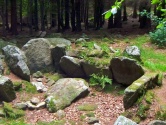
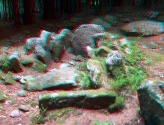
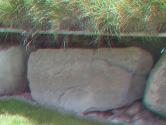
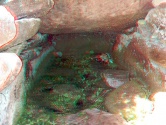
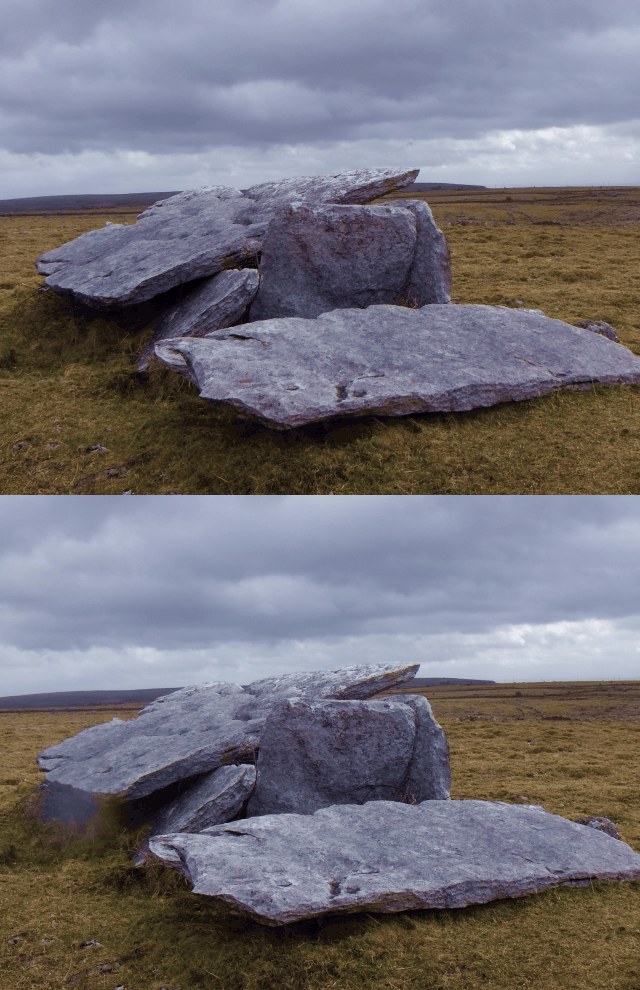
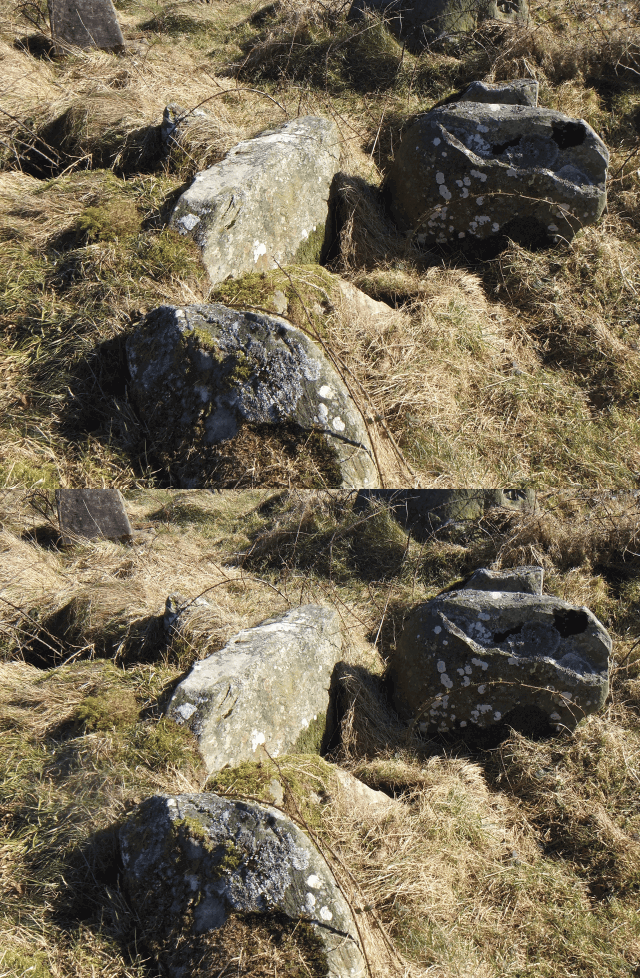
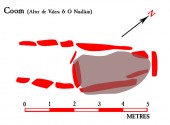
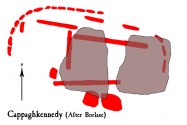
The twin galleries are aligned roughly east-west and share a common back stone. Each gallery is divided into two sections by inset jambs with a sill stone set between them. The east court is only present on the south side, but some stones lie around opposite, which are presumably the remains of the other arm.
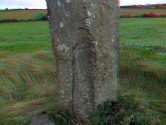
The west court is unusual. The southern arm stretches out around 4m and terminates in a lovely 2m tall stone. The north arm only extands a little over 1m at which point it meets a low ledge of natural bed rock. This arm couldn't have one any further. What an odd place to build it!
The ease of access, the state of the galleries and the superb remains of the two courts place this monument high up on the list of ones to visit.
Court tombs have several distinctive characteristics that allow easy identification when in fair condition. One key feature that is a great help, no matter what the condition, is that court tombs are nearly always aligned north to south. They were all originally covered by a cairn, but in most instances this is now missing, or at best only remain to a height of one or two metres. The easiest feature to identify (when intact) is obviously the court. The rest of the tomb is occupied by a long, divided, passage-like gallery.
Galleries:
Galleries of court tombs can usually be identified by their characteristic boat-shaped plan, i.e. the gallery, when viewed from above, is flat at the entrance and tapers to a point or narrow width at the rear. The gallery may be segmented into up to five chambers by jambs, the walls normally being made of large slabs. The roofs were created by laying large slabs across the gallery, either directly on to the tops of the wall slabs or resting on corbel stones. Two large stones, with smooth forward-facing faces, usually create the entrance and it is possible to identify a court tomb when only these stones remain. The gallery would have been covered by a cairn of stones, sometimes with a kerb.
Single Gallery Variations:
Most often called a 'Single Court Tombs, usually this style has a half-court, a horseshoe-shaped arrangement of stones in front of the gallery (see Ballymacdermot (County Armagh)). This is usually, but not always, symmetrical about the centre line of the gallery, although occasionally the centre line of the court forms a slight angle with the centre line of the gallery. The other option is a full-court formed a complete circle of stones (see Creevykeel (County Sligo)). These full-courts mainly have one entrance allowing access, which is usually opposite the entrance to the gallery.
Double Gallery Variations:
Double-gallery court tombs come in three styles, the last of which is very unusual. The first is where the chambers are built facing away from each other. These are usually referred to as ëDouble Court Tombsí (see Cohaw (County Cavan)). The galleries sometimes share the same rear stone, but more often there is some distance between them ñ ranging from one to ten metres. This style has a half-court at each end of the monument, one facing north and the other facing south. In this style both galleries would have been covered by the same cairn.
Tuning round the two tombs and placing the two galleries so that the entrances face each other, across a full court, creates another style, known as a Centre-Court Tomb. Access to this court is gained through entrances placed (usually) in the east and west sides of the court. Here there would have been two cairns, one at each end, but they would have been joined down the sides of the court by a low cairn.
The third and very uncommon form is where the two galleries are located side-by-side facing into a full court with an entrance opposite (e.g. Malin More).
Subsidiary Chambers:
Quite often you will find other chambers built into the cairn. In single-gallery tombs and double court tombs these are invariably located to the rear of the gallery. Centre court tombs often have them placed near to the entrances.
Court tombs have several distinctive characteristics that allow easy identification when in fair condition. One key feature that is a great help, no matter what the condition, is that court tombs are nearly always aligned north to south. They were all originally covered by a cairn, but in most instances this is now missing, or at best only remain to a height of one or two metres. The easiest feature to identify (when intact) is obviously the court. The rest of the tomb is occupied by a long, divided, passage-like gallery.
Galleries:
Galleries of court tombs can usually be identified by their characteristic boat-shaped plan, i.e. the gallery, when viewed from above, is flat at the entrance and tapers to a point or narrow width at the rear. The gallery may be segmented into up to five chambers by jambs, the walls normally being made of large slabs. The roofs were created by laying large slabs across the gallery, either directly on to the tops of the wall slabs or resting on corbel stones. Two large stones, with smooth forward-facing faces, usually create the entrance and it is possible to identify a court tomb when only these stones remain. The gallery would have been covered by a cairn of stones, sometimes with a kerb.
Single Gallery Variations:
Most often called a 'Single Court Tombs, usually this style has a half-court, a horseshoe-shaped arrangement of stones in front of the gallery (see Ballymacdermot (County Armagh)). This is usually, but not always, symmetrical about the centre line of the gallery, although occasionally the centre line of the court forms a slight angle with the centre line of the gallery. The other option is a full-court formed a complete circle of stones (see Creevykeel (County Sligo)). These full-courts mainly have one entrance allowing access, which is usually opposite the entrance to the gallery.
Double Gallery Variations:
Double-gallery court tombs come in three styles, the last of which is very unusual. The first is where the chambers are built facing away from each other. These are usually referred to as ëDouble Court Tombsí (see Cohaw (County Cavan)). The galleries sometimes share the same rear stone, but more often there is some distance between them ñ ranging from one to ten metres. This style has a half-court at each end of the monument, one facing north and the other facing south. In this style both galleries would have been covered by the same cairn.
Tuning round the two tombs and placing the two galleries so that the entrances face each other, across a full court, creates another style, known as a Centre-Court Tomb. Access to this court is gained through entrances placed (usually) in the east and west sides of the court. Here there would have been two cairns, one at each end, but they would have been joined down the sides of the court by a low cairn.
The third and very uncommon form is where the two galleries are located side-by-side facing into a full court with an entrance opposite (e.g. Malin More).
Subsidiary Chambers:
Quite often you will find other chambers built into the cairn. In single-gallery tombs and double court tombs these are invariably located to the rear of the gallery. Centre court tombs often have them placed near to the entrances.